01
Source & treat
Assess local water sources, seasonal availability and quality. Select suitable treatment so the planned supply matches the site’s intended use and required permissions.
We want to build complete wildfire defence infrastructure for your property, community or city — with a vision to scale across America.
Water collection and treatment. Reservoirs. Pumping stations and pipelines. Backup power. Rain Towers. Vegetation management. AI cameras with continuous image analysis for early smoke and fire detection, supported by weather, mapping and suitable sensors.
ZionDome’s rollout in the USA is in development. We are inviting property owners, communities and municipalities to shape the first pilot projects in the USA.
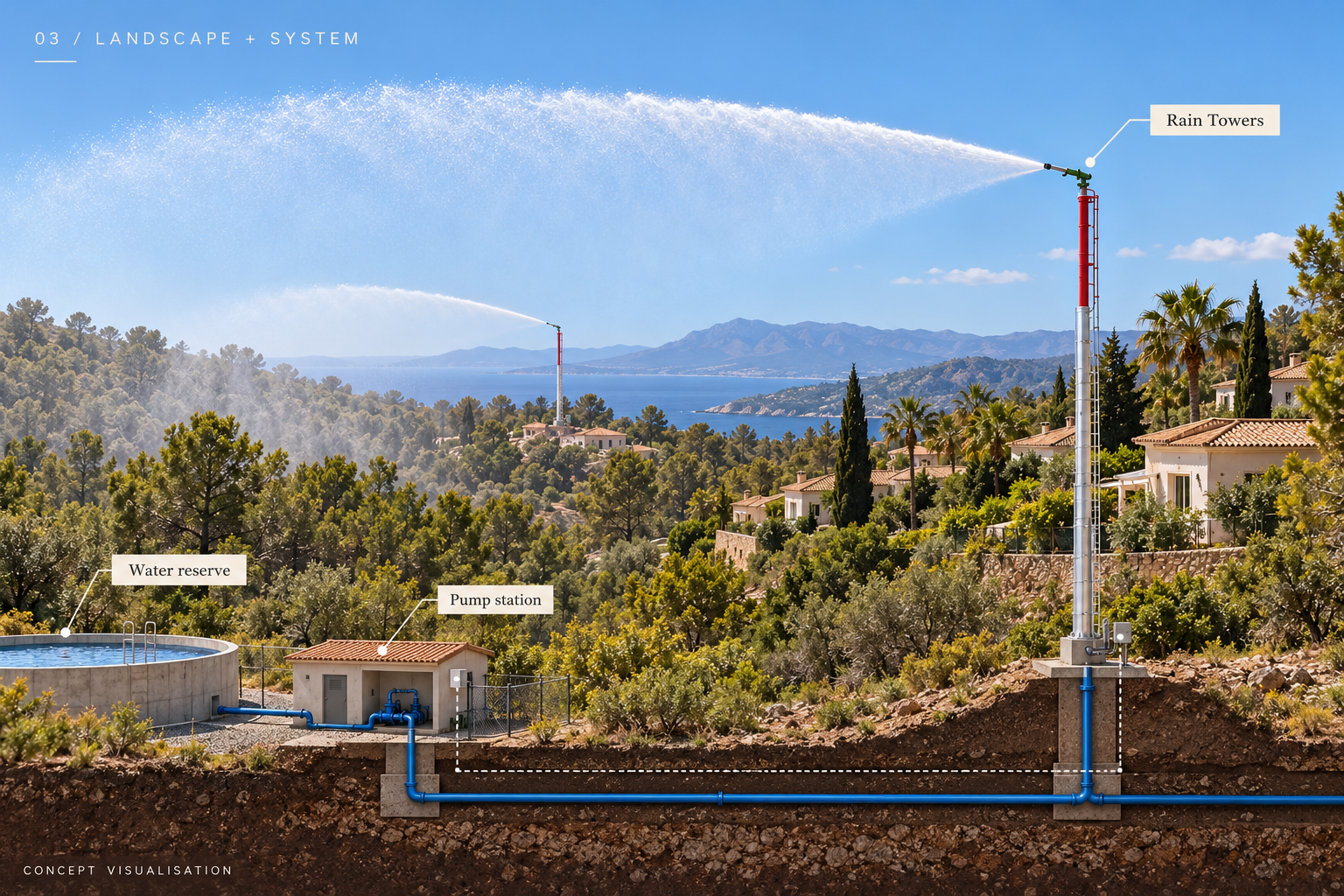
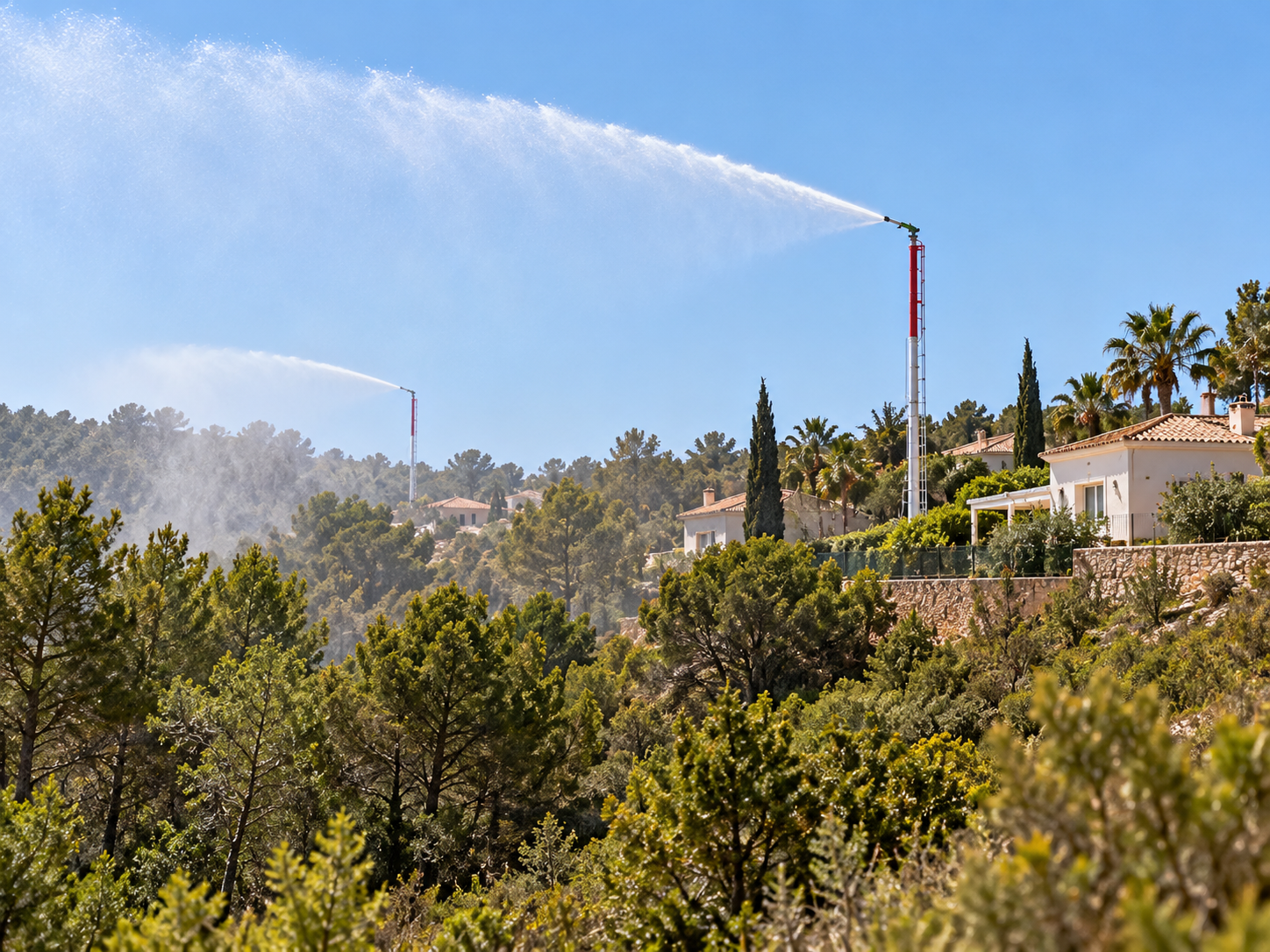
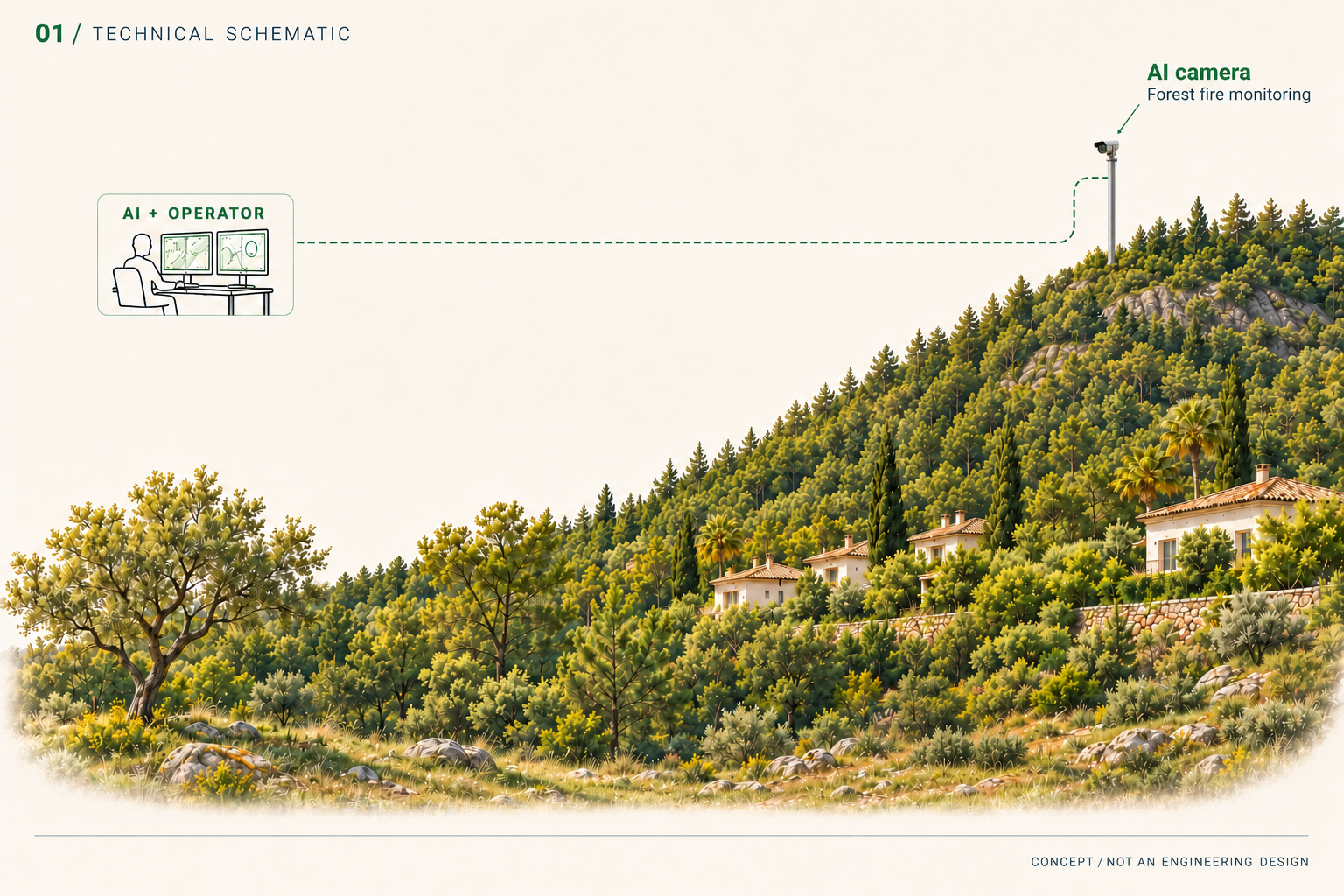
Assess local water sources, seasonal availability and quality. Select suitable treatment so the planned supply matches the site’s intended use and required permissions.
Size reservoirs for the site’s protection plan. Define how reserves will be replenished, monitor available water and maintain storage readiness through dry periods.
Engineer pumps, pipelines and Rain Tower locations for the site. Match flow and pressure requirements, with backup power and regular checks of critical equipment.
Plan monitoring of fire risk, water levels and equipment status. Give trained operators clear alerts and procedures to coordinate decisions, maintenance and response.
Water sources must be assessed for seasonal availability, water quality and permitted use. Storage, treatment, pumping and distribution are engineered for each site.

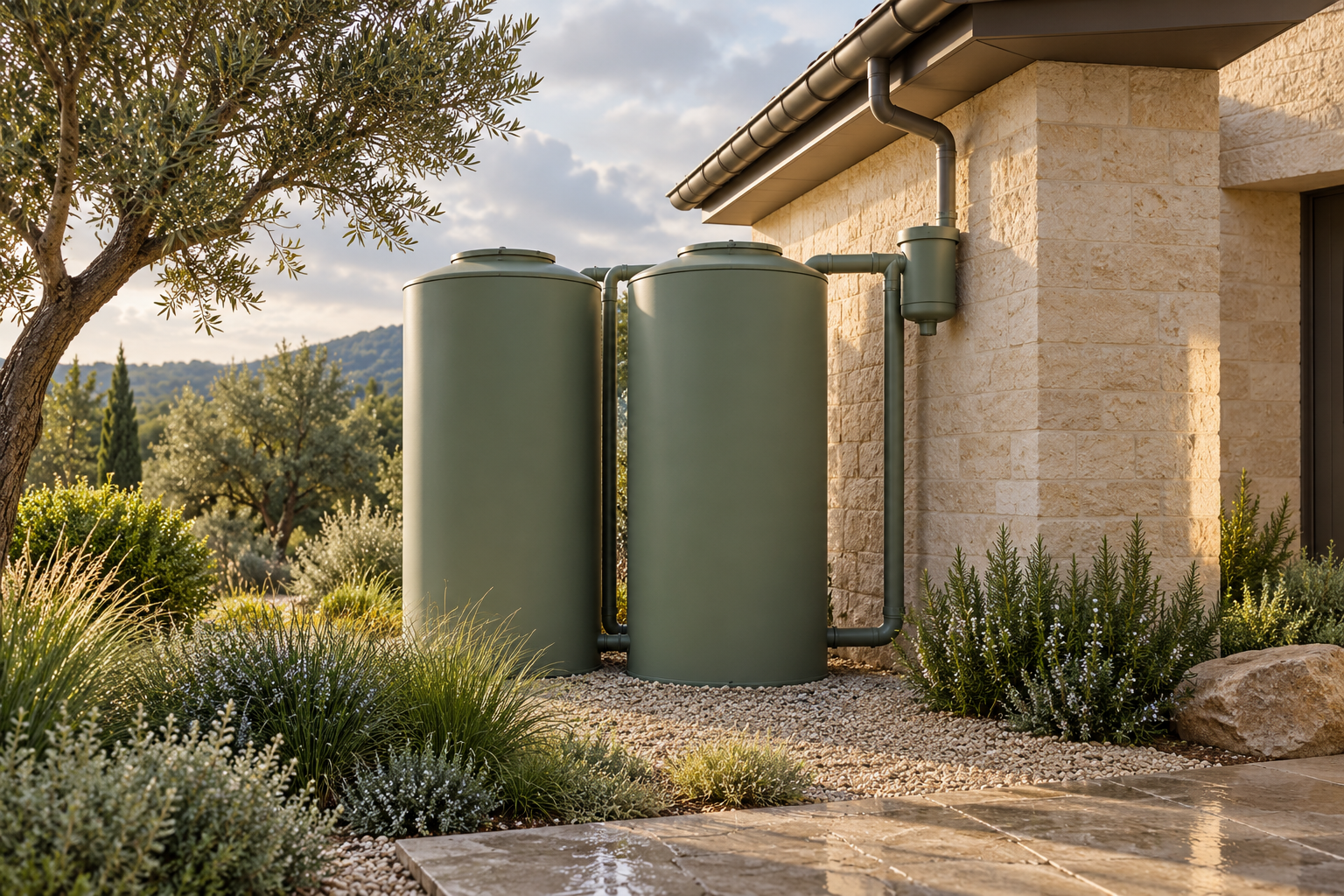


Illustrative photography · Not a ZionDome installation
Sources → Treatment → Storage → Pumps → Rain Towers → AI monitoring → Operator-approved action
Reliable reserves need a replenishment plan, maintenance and monitoring — not just a tank.
ZionDome combines specialist cameras and AI image analysis with weather data, maps and equipment sensors. The system helps operators identify possible smoke or fire early, check water reserves and pump readiness, and coordinate a response. Operators review alerts and approve equipment activation through engineered safeguards. Monitoring and equipment control support an informed, coordinated response.
In Riba-roja de Túria and Paterna, near Valencia, GUARDIAN connects treated wastewater, storage, pumping and fixed water cannons with managed vegetation and local preparedness.
Watch the official GUARDIAN project video ↗︎
The European Environment Agency’s Climate-ADAPT case study, updated in 2024, documents an advanced water treatment system, four new tanks and one renovated tank, and more than 6,500 metres of distribution pipework. Reclaimed water supports green firebreaks along the forest–settlement boundary.
The project combines sensor-informed irrigation with forest management and training for residents. Climate-ADAPT also identifies a policy achievement: regional legislation was amended to recognize green firebreaks and recycled-water irrigation as fire-risk reduction measures.
These are infrastructure and preparedness achievements, not proof that the whole city of Valencia is protected or that losses can always be prevented. The case study stresses that fuel-reduction work is essential to the system’s effectiveness.
Sources: EEA Climate-ADAPT case study; GUARDIAN official videoblog (Spanish-language project presentation).
Wye River Fire Brigade turned a recurring problem—dedicated firefighting tanks that crews could not use—into a practical programme of property audits, resident guidance and mapped water access.
Read the CFA brigade report ↗︎
CFA’s September 27, 2023 report describes an audit sheet covering signage, outlets, pipework, tank size and location. The brigade produced a resident flyer and began mapping usable water points in Wye River and neighbouring Separation Creek, Kennett River and Grey River for crews planning their response.
At one volunteer test property, the brigade helped select the tank and outlet locations. The owner increased the dedicated reserve to 15,000 litres, with the home’s sprinklers supplied from a separate tank.
The lesson is operational readiness: stored water must be accessible, maintained and usable by responding crews. This report documents practical improvements; it does not quantify homes saved or establish a guaranteed reduction in losses.
Source: CFA, Andrew Hack, Wye River Brigade Captain, September 27, 2023.
Royol News reports that Roger Richman’s Stunt Road home survived the Palisades Fire with help from pre-installed suppression and a private firefighting team. One property’s experience offers lessons, not guarantees.
Watch the original Royol News video ↗︎
In Royol News reporting published on March 2, 2025, Roger Richman shows his property near the top of Stunt Road, overlooking Malibu and the Valley. The report attributes a role in protecting the home to a fire suppression system installed across the property before the fire and a private firefighting team that arrived to help.
For ZionDome’s audience of property owners and communities, this account raises practical planning questions: what protection is in place before a fire, who will operate it, and how will responders coordinate? These are our planning observations, not measured findings about this property.
This is one reported survival, not a controlled test or a guarantee that suppression systems will prevent losses. The report does not establish how much each measure contributed. We have not independently verified the installation’s specifications or performance.
CAL FIRE’s independent preparedness guidance emphasizes ignition-resistant home improvements together with defensible space. Supplemental equipment should be considered within a site-specific plan; it does not replace these measures or evacuation. Follow local authorities’ evacuation instructions.
This is an external example. Roger Richman is not presented as a ZionDome customer, partner or endorser, and the reported system is not identified as ZionDome technology.
Sources: Royol News, Brandon Taylor, March 2, 2025 (property account and original reporting); CAL FIRE: Get Ready (general preparedness guidance, not verification of Richman’s property).
External examples, not ZionDome installations, partnerships or endorsements. Individual examples do not establish guaranteed effectiveness.
Comprehensive wildfire infrastructure creates the physical foundation. Documented maintenance, equipment checks, resident training and coordinated response show how that protection is kept ready. SuperCover brings these elements together to support an informed insurance assessment.
Connect water supply, reserves, pumps, Rain Towers and AI monitoring in one site-specific protection plan.
Keep clear records of inspections, maintenance, equipment checks, resident training and local response arrangements.
Present the protection measures and supporting records for review by a licensed insurance partner.
Seek suitable coverage and terms based on the insurer’s assessment of the property, risks and protection measures.
Our goal: a stronger basis for insurance assessment and negotiations over coverage and terms.
Discuss an insurance partnership →We are seeking licensed insurance partners. No insurer or policy has yet been confirmed. The insurer determines eligibility, coverage, conditions and price. Protection measures do not guarantee insurance or lower premiums.
We plan to involve neighbours, homeowners’ associations and local communities in shaping each pilot. Proposed activities include practical workshops, shared preparedness checklists, contact networks and exercises to help residents understand alerts and their agreed roles.
Education would cover property readiness, responsible use of shared resources and helping neighbours who may need support. Local authorities’ emergency instructions would guide community plans.
We aim to develop coordination arrangements with fire services, police, rescue teams and recognised volunteer groups. Pilot discussions would address site access, water points, contact procedures, information sharing and clearly assigned responsibilities.
Joint briefings and exercises would help test the plan. Volunteers would work within agreed roles, training and official direction. These are proposed relationships; no emergency-service partnership is currently being claimed.
Record water availability, access, vegetation, equipment and local response arrangements. Identify gaps and agree priorities with qualified specialists and the community.
Schedule inspections, equipment checks and preparedness exercises. Keep responsibilities clear and address faults before an emergency puts the system under pressure.
Maintain an organised record of assessments, maintenance, training and improvements for review with project partners and any prospective insurer. Insurance decisions remain with the insurer.

We honour America’s wildland firefighters, along with fire crews, police, rescuers and volunteers who serve their communities. The Pulaski tool is pictured here as a tribute to their skill, courage and service.
About the Pulaski tool · U.S. Fish & Wildlife Service ↗May God bless and protect us.